Easy 50-Minute Pumpkin Chicken Pasta
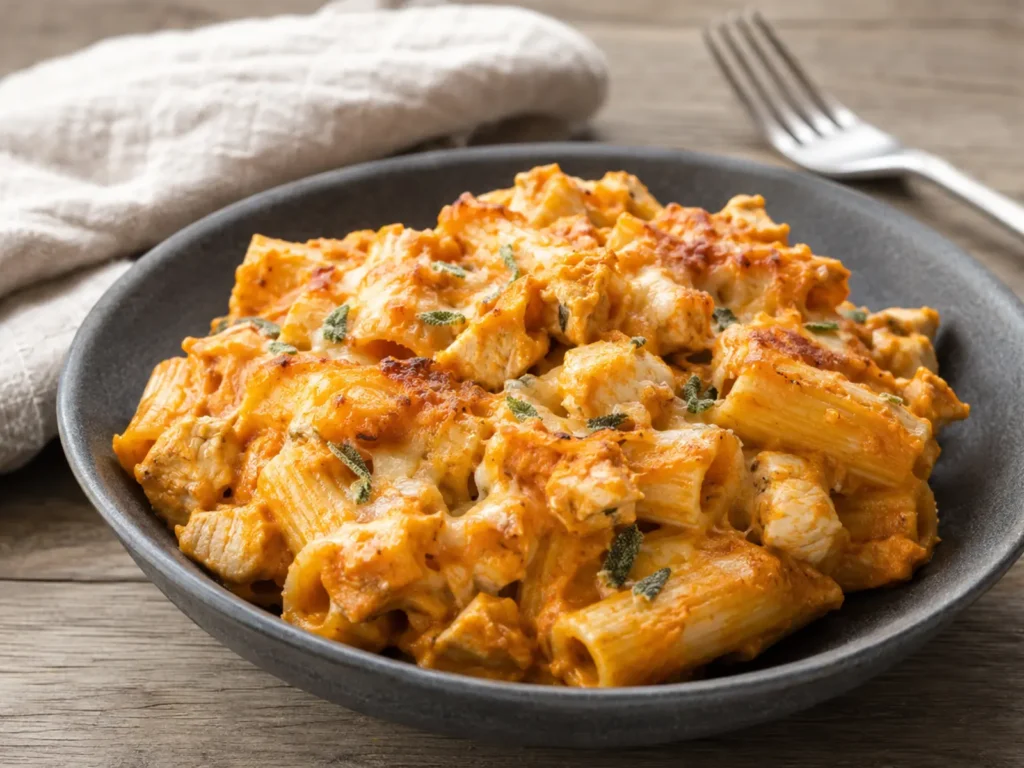
Pumpkin Chicken Pasta turns familiar baked pasta into a cozy fall dinner with a savory pumpkin sauce, tender shredded chicken, and a bubbling layer of Havarti. The pumpkin gives the sauce body and a warm golden color without making the dish taste sweet, while sage and black pepper keep the flavor firmly on the savory side. Rigatoni is especially useful here because its ridges catch the thick sauce and its hollow centers hold small pieces of chicken.
This is a practical way to use a rotisserie chicken and a full can of pumpkin purée in one meal. Most of the cooking happens on the stovetop before the casserole moves to the oven for melting and browning. The result is creamy beneath the cheese, crisp around the edges, and substantial enough to serve as a complete weeknight dinner.
A Cozy Pasta Bake Built for Busy Evenings
This casserole combines several time-saving choices without sacrificing texture. Cooked chicken removes a separate meat-cooking step, canned pumpkin creates an instant sauce base, and the pasta water loosens that sauce while helping it cling to the noodles. A short bake melts the Havarti, then a brief turn under the broiler creates browned bubbles and crisp pasta edges.
The components are also easy to coordinate. The sauce is made in the same pot used for the pasta, which limits cleanup and keeps the starchy residue available to support the sauce. Once assembled, the casserole needs little attention beyond watching the cheese carefully during broiling.
Key Ingredients for Pumpkin Chicken Pasta
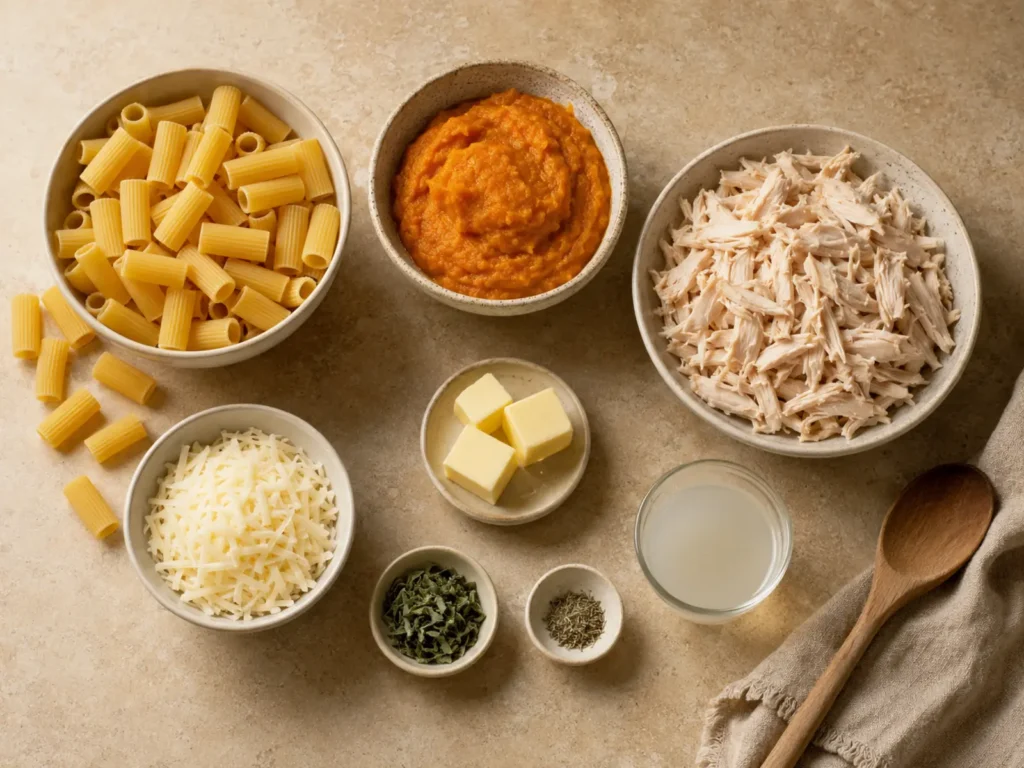
- Mezze rigatoni: The short tubes and pronounced ridges capture the pumpkin sauce well. Another sturdy short pasta can work, but very delicate shapes may soften too much during baking.
- Pumpkin purée: Use plain 100% pumpkin purée rather than sweetened pumpkin pie filling. It provides thickness, earthy flavor, and the dish’s characteristic golden color.
- Rotisserie chicken: Shredded cooked chicken makes the casserole fast and gives the sauce plenty of savory flavor. Remove bones, cartilage, and large pieces of skin before shredding it into bite-size strands.
- Havarti cheese: Havarti melts smoothly and gives the top a creamy, mild finish. Grating it rather than laying it in slices helps the cheese melt and brown evenly.
- Butter: Butter carries the sage and softens the earthy character of the pumpkin. Let it melt gently so it does not brown before the purée is added.
- Sage: Dried sage disperses easily through the sauce, while fresh minced sage gives a brighter herbal note. Either option should support the pumpkin rather than dominate it.
- Reserved pasta water: The starch in the cooking water helps transform pumpkin purée into a sauce that coats the pasta instead of sitting in dense clumps.
See the recipe card below for the complete ingredient list and exact measurements.
How to Make Pumpkin Chicken Pasta
- Heat the oven and prepare the dish. Preheat the oven before starting the sauce so the assembled casserole can go in immediately. Have a 9×13-inch baking dish ready near the stove.
- Cook the pasta until al dente. Boil the rigatoni in well-salted water and begin checking it before it becomes fully tender. It will continue cooking in the oven, so the center should still offer a little resistance. Reserve the required pasta water before draining.
- Build the pumpkin sauce. Melt the butter in the empty pasta pot over medium heat. Add the pumpkin, sage, pepper, and salt, then stir until the mixture is uniform and steaming. This brief cooking period warms the purée and releases the sage’s aroma.
- Add the chicken and pasta. Stir in the shredded chicken first so it becomes coated, then fold in the drained pasta and reserved cooking water. Continue mixing until the sauce looks smooth and reaches inside the rigatoni rather than remaining in thick patches.
- Assemble the casserole. Spread the pasta in an even layer in the baking dish. Scatter the grated Havarti across the entire surface so the edges receive as much coverage as the center.
- Bake, then broil. Bake until the cheese has melted and the casserole is hot throughout. Switch to the broiler only for the final browning stage. The top is ready when the cheese bubbles, develops golden patches, and the exposed pasta edges begin to crisp.
- Finish and serve. Remove the dish before the cheese becomes dark or oily. Add chopped chives if desired, then allow the casserole to stand briefly so the sauce settles around the pasta before portioning.
Success Tips for a Creamy, Crisp Pasta Bake
Cook the pasta only to al dente. Fully tender pasta absorbs more liquid during baking and can become overly soft by the time the cheese browns. A firm center gives the noodles enough structure to withstand both the sauce and the oven.
Reserve the pasta water before draining. Plain water can thin pumpkin purée, but starchy cooking water does more: it helps the butter, pumpkin, and moisture combine into a cohesive coating. Add the full verified amount during assembly, because the sauce will thicken as it bakes.
Shred the chicken into small, irregular pieces rather than large chunks. Smaller strands distribute through the rigatoni and reduce dry pockets. If the rotisserie chicken has been refrigerated, separate the pieces before adding them so they warm evenly.
Watch the broiler continuously. Broiler intensity varies greatly, and Havarti can move from pale to deeply browned quickly. Keep the baking dish under close watch and remove it as soon as the top is bubbly with golden spots.
Variations and Practical Substitutions
Another sturdy short pasta, such as standard rigatoni, penne, or ziti, can replace mezze rigatoni. Larger tubes may hold more chicken and sauce, while smaller shapes can produce a denser casserole. Keep the verified pasta quantity and cook the chosen shape only to al dente.
Leftover plain roasted or poached chicken can replace rotisserie chicken when the same cooked quantity is available. Because some rotisserie chickens are more heavily seasoned, taste the pumpkin sauce before adding additional salt. Avoid using raw chicken in the assembly; it would require a different cooking process and timing.
Fresh sage can replace dried sage using the source-supported amount. Its flavor is greener and less concentrated, so mince it finely to distribute it through the sauce. Chopped chives are optional and add a mild onion finish, but the casserole remains complete without them.
What to Serve With It
Pumpkin Chicken Pasta is rich enough to anchor the meal, so simple sides work best. A crisp green salad with a bright vinaigrette provides contrast without competing with the sage and pumpkin. Roasted green beans, steamed broccoli, or sautéed spinach can add freshness and color while keeping the dinner straightforward.
For serving, use a wide spoon or flexible spatula that can reach beneath the pasta and lift portions without scraping away the browned cheese. A light sprinkle of fresh chives adds color and mild onion flavor, but extra heavy toppings can hide the casserole’s crisp surface.
Storage, Reheating, and Make-Ahead Guidance
Cool leftovers promptly and transfer them to an airtight container. Refrigerate them for up to three days. For broader safety guidance, the USDA recommends refrigerating cooked leftovers promptly and reheating them thoroughly.
Reheat individual portions covered in the microwave so the pasta retains moisture, or warm a larger portion in an oven-safe dish. A small splash of water can loosen sauce that has thickened in the refrigerator. According to the USDA safe-temperature guidance, leftovers and casseroles should reach 165°F when reheated.
For advance preparation, cook the pasta and assemble the casserole close enough to baking that the noodles do not sit in the sauce for an extended period. If the components must wait, keep the cooked pasta and pumpkin-chicken mixture refrigerated separately, then combine them with the reserved liquid and cheese before baking. Freezing is possible for food-safety purposes, but the pasta may soften and the creamy pumpkin coating can lose some of its smooth texture after thawing.
A Golden Dinner Worth Serving Hot
Pumpkin Chicken Pasta is at its best when the Havarti is still bubbling and the browned edges are crisp. Let the casserole settle briefly after broiling, but do not leave it uncovered so long that the cheese firms before serving. Pair each portion with a fresh green side, and bring the baking dish to the table while the pumpkin sauce is still creamy and warm.
Frequently Asked Questions About Pumpkin Chicken Pasta
Can I assemble Pumpkin Chicken Pasta ahead of time?
Yes, but keep the waiting period as short as practical so the pasta does not absorb too much sauce before baking. For better texture, refrigerate the cooked pasta and pumpkin-chicken mixture separately, then combine them with the reserved liquid and cheese shortly before the casserole goes into the oven.
Can I use leftover chicken instead of rotisserie chicken?
Yes, plain cooked chicken can replace the rotisserie chicken when you use the same verified cooked quantity. Shred or chop it into small pieces so it distributes evenly through the rigatoni. Taste the sauce before adjusting the salt because the seasoning level will differ from one cooked chicken to another.
How should I reheat Pumpkin Chicken Pasta?
Reheat a covered portion in the microwave or place a larger amount in an oven-safe dish and warm it until the center reaches 165°F. Add a small splash of water if the sauce appears tight after refrigeration. Covering the pasta for most of the reheating time limits moisture loss.
Why did my pumpkin sauce become too thick?
The sauce usually becomes too thick when the reserved pasta water is omitted or the pasta sits in the sauce for too long before baking. Use the full reserved quantity of cooking water and mix until every noodle is coated. When reheating, a small amount of water can restore a creamier consistency.
Easy 50-Minute Pumpkin Chicken Pasta

Pumpkin Chicken Pasta combines al dente rigatoni and shredded chicken with a savory sage-seasoned pumpkin sauce. A layer of grated Havarti melts over the casserole before broiling, creating a creamy center with bubbling cheese and crisp golden edges.
- Prep Time: 10 minutes
- Cook Time: 40 minutes
- Total Time: 50 minutes
- Yield: 6 servings 1x
- Category: Main Course
- Method: Baking
- Cuisine: International
Ingredients
- 1 pound mezze rigatoni or another short pasta
- 4 tablespoons unsalted butter
- 1 (15-ounce) can 100% pumpkin purée
- 2 teaspoons dried sage or 1 teaspoon fresh minced sage
- 1 teaspoon freshly ground black pepper, plus more to taste
- 1/2 teaspoon kosher salt, plus more for the pasta water and to taste
- 1 rotisserie chicken, shredded (about 2 1/2 cups)
- 2 cups grated Havarti cheese
- Chopped fresh chives, for serving (optional)
Instructions
- Preheat the oven to 400°F and set out a 9×13-inch baking dish.
- Bring a large pot of generously salted water to a boil. Cook the pasta until al dente according to its package directions. Scoop out 1 1/4 cups of pasta water, then drain the noodles.
- Return the empty pot to medium heat and melt the butter. Stir in the pumpkin purée, sage, black pepper, and kosher salt. Cook for about 2 minutes, stirring occasionally, until the mixture is uniform and steaming. Taste and adjust the seasoning as needed.
- Fold the shredded chicken into the pumpkin mixture. Add the drained pasta and reserved cooking water, then stir until the sauce evenly coats the noodles and fills the rigatoni.
- Spread the pasta mixture evenly in the baking dish. Cover the surface with the grated Havarti.
- Bake for about 10 minutes, until the cheese is completely melted and the casserole is hot. Turn on the broiler and broil for about 5 minutes, watching continuously, until the cheese bubbles and browns and the exposed pasta edges begin to crisp.
- Remove the casserole from the oven, garnish with chopped chives if desired, and serve hot.
Notes
- Cook the pasta only to al dente because it continues softening in the oven.
- Reserve the pasta water before draining; its starch helps the pumpkin sauce coat the rigatoni.
- Plain leftover cooked chicken can replace rotisserie chicken when used in the same cooked quantity.
- Refrigerate leftovers in an airtight container for up to 3 days and reheat to 165°F.
- Watch the casserole continuously under the broiler because Havarti can brown quickly.
- Nutrition information is an estimate calculated per serving and may vary by ingredient brand and portion size.
Nutrition
- Serving Size: 1 serving
- Calories: 565 kcal
- Sugar: 3.0 g
- Sodium: 707 mg
- Fat: 32.0 g
- Saturated Fat: 16.0 g
- Unsaturated Fat: 15.2 g
- Trans Fat: 0.8 g
- Carbohydrates: 31.0 g
- Fiber: 4.0 g
- Protein: 39.0 g
- Cholesterol: 174 mg
Keywords: Pumpkin Chicken Pasta, pumpkin pasta bake, chicken pasta casserole, fall dinner, rigatoni bake, pumpkin chicken casserole