Tomato Ricotta Pasta for a Cozy, Creamy Dinner
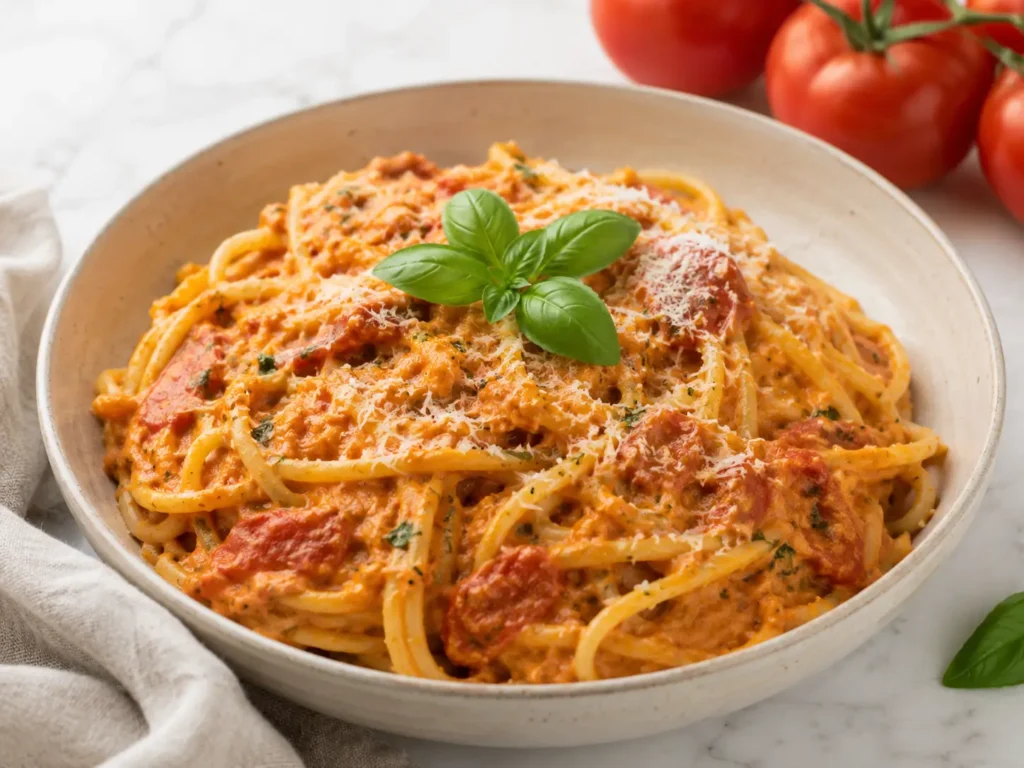
Tomato Ricotta Pasta is one of those dinners that makes the kitchen smell like you’ve been doing something far more impressive than you actually have. The tomatoes collapse in the oven until they’re jammy around the edges, the garlic turns soft and mellow, and then ricotta swoops in and makes the whole sauce creamy without feeling heavy.
I made this once on a night when I fully planned to “just have toast,” which is usually code for standing at the counter eating whatever is easiest. But the tomatoes on my counter were getting almost too ripe, the basil was looking a little dramatic in the fridge, and pasta always has a way of talking me into a real dinner. By the time the garlic started roasting, I knew I’d made the right choice.
This Tomato Ricotta Pasta has that cozy, silky, roasted tomato sauce that clings to every strand of pasta. It’s bright but creamy, savory but a little sweet, and the basil gives it that fresh lift right at the end. The best part is that it feels relaxed. Nothing fussy. Nothing precious. Just tomatoes, garlic, ricotta, pasta, and a few small details that make the whole bowl taste like summer comfort food.
The Roasted Tomato Magic Behind This Tomato Ricotta Pasta
The flavor of this Tomato Ricotta Pasta really starts in the oven. Raw tomatoes are lovely, sure, but roasted tomatoes are a completely different mood. They soften, blister, and concentrate until their juices get richer and sweeter. The edges caramelize slightly, and that’s where the sauce gets its depth.
The garlic roasts right alongside them, which is the tiny move that makes the biggest difference. Instead of sharp, punchy garlic, you get something buttery and sweet. When you squeeze the roasted cloves from their skins, they almost melt. I always think I’m going to be neat about this part, and then somehow I end up with garlicky fingers and a spoon balanced badly on the edge of the blender. Worth it every time.
Once the roasted tomatoes and garlic meet ricotta, the sauce turns velvety. Not thick like a heavy cream sauce, but smooth and spoon-coating, with a gentle richness that still lets the tomatoes shine. A splash of starchy pasta water helps loosen everything into a glossy sauce, so don’t forget to save some before draining the pasta. I’ve forgotten before. I stood there looking at the sink like it had personally betrayed me.
Ingredients That Give Tomato Ricotta Pasta Its Cozy Flavor
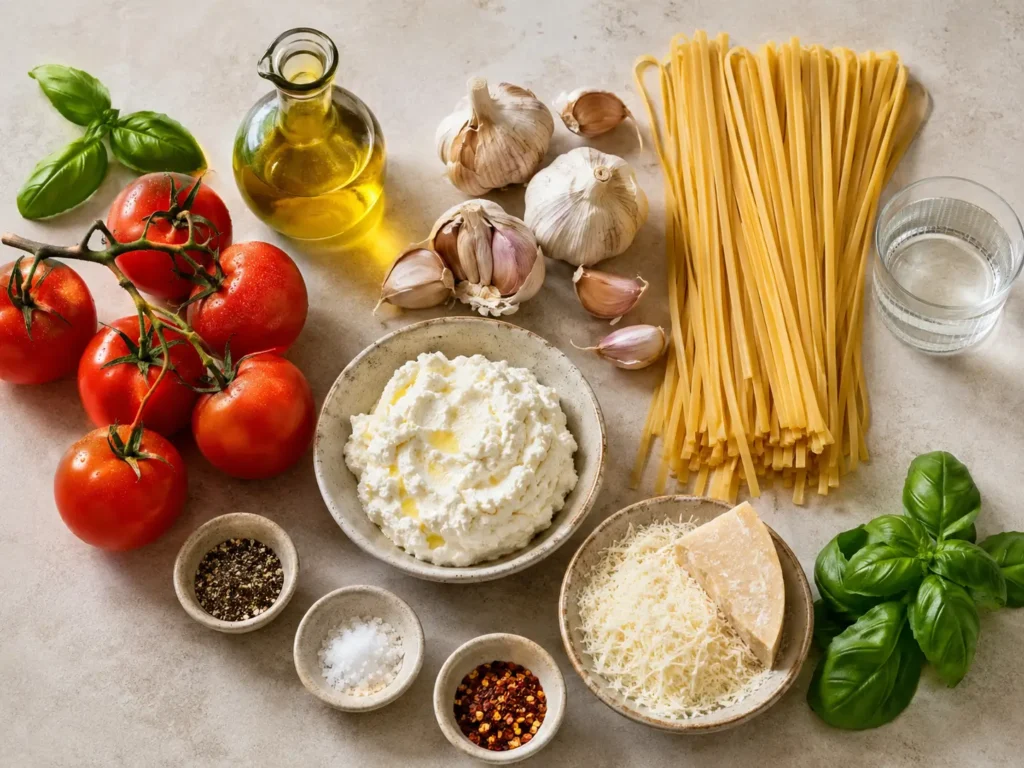
• Tomatoes – ripe medium vine tomatoes are the heart of the sauce, bringing sweetness, juiciness, and that deep roasted tomato flavor.
• Garlic – roasting softens the garlic and turns it mellow, sweet, and almost creamy, which makes the sauce taste rounded instead of sharp.
• Olive oil – helps the tomatoes blister and keeps everything rich, glossy, and fragrant as it roasts.
• Salt and pepper – simple seasoning, but it pulls the tomato flavor forward and balances the creamy ricotta.
• Pasta – spaghetti, fettuccine, or another favorite shape works here, especially something that can hold onto a smooth tomato ricotta sauce.
• Pasta cooking water – the starchy water helps the sauce loosen, cling, and turn silky instead of dry.
• Chilli flakes – optional, but they add a gentle warmth that cuts through the creamy sauce nicely.
• Ricotta cheese – this is what gives Tomato Ricotta Pasta its creamy texture without making it feel too heavy.
• Fresh basil – adds a fresh, peppery brightness that wakes up the roasted tomatoes.
• Parmesan cheese – a salty, nutty finish that makes each bowl taste complete.
See the recipe card below for the full list of ingredients and measurements.
Turning Blistered Tomatoes Into a Creamy Pasta Sauce
Start by getting the oven hot and giving the tomatoes plenty of room in a baking dish. I like to place them cut-side up or a little scattered, depending on my patience level that day. The garlic goes in with them, either as a small whole head with the top trimmed or as unpeeled cloves tucked nearby.
Drizzle everything with olive oil, then season with salt and pepper. It won’t look dramatic yet, but give it time. As the tomatoes roast, their skins wrinkle, the juices bubble, and the garlic softens until it’s sweet enough to blend straight into the sauce.
Partway through roasting, the dish gets covered with foil and goes back into the oven. This helps the garlic finish softening while the tomatoes become beautifully blistered and caramelized. You’re looking for tomatoes that look a bit slumped and glossy, not neat and perky. Neat tomatoes don’t make the best sauce.
While that’s happening, cook the pasta in well-salted water until it’s al dente. Before draining, scoop out some of the pasta water. This little cup of cloudy water is the difference between a sauce that sits on the pasta and one that hugs it properly.
When the tomatoes and garlic are ready, squeeze the soft garlic from its papery skin and add it to a blender with the roasted tomatoes, ricotta, basil, chilli flakes if you’re using them, and a splash of reserved pasta water. Blend until smooth. The color turns a warm, creamy orange-red, and it smells like roasted garlic, sweet tomatoes, and basil all at once.
Pour the sauce into a large skillet or pan, add the cooked pasta, and toss until every strand is coated. Warm it gently over medium heat. Add more pasta water only as needed, little by little, until the sauce looks silky and moves easily through the pasta. Taste, adjust the seasoning, then serve with basil and parmesan.
Getting the Sauce Silky, Not Watery
The trick with Tomato Ricotta Pasta is adding pasta water gradually. It’s tempting to pour in a big splash and hope for the best, but ricotta sauce likes a softer approach. Add a little, toss, look at the texture, then decide.
The sauce should coat the pasta without pooling at the bottom of the pan. If it looks too thick, add more pasta water. If it looks too loose, keep tossing it over gentle heat for a moment so the starch and sauce can come together.
Ricotta can vary a bit from brand to brand, too. Some are thicker and grainier, while others are softer and creamier. Blending helps smooth it out, and the roasted tomatoes bring enough moisture to keep the sauce from feeling pasty. That’s why the roasted tomato juices are so important. Don’t leave them behind in the baking dish; scrape in every bit.
Small Twists That Still Keep the Tomato Ricotta Pasta True
This Tomato Ricotta Pasta doesn’t need much changing, but it’s flexible in the way good weeknight pasta should be.
Cherry tomatoes can work if that’s what you have, though they may roast a little differently because they’re smaller and sweeter. Keep an eye on them so they caramelize without drying out too much.
For the cheese, ricotta gives the cleanest creamy texture, but mascarpone, cream cheese, or a dairy-free alternative can be used if needed. Each one changes the personality of the sauce a bit. Mascarpone makes it richer, cream cheese gives it more tang, and dairy-free versions depend on the brand, so taste as you go.
For pasta, long noodles like spaghetti and fettuccine feel classic with this creamy tomato ricotta sauce, but other shapes can absolutely work. A twisty shape catches the sauce in little pockets, which is never a bad thing. Just keep the pasta al dente so it doesn’t disappear into softness once tossed with the warm sauce.
Chilli flakes are optional, but I love the little flicker of heat. Not enough to make the dish spicy in a big way, just enough to keep every bite lively. Fresh basil at the end matters, too. It cuts through the creamy tomato sauce and makes the whole bowl smell fresh instead of overly rich.
Serving and Storing Tomato Ricotta Pasta Without Losing the Creaminess
Serve Tomato Ricotta Pasta right away, while the sauce is warm and glossy. A shower of grated parmesan over the top adds a salty finish, and fresh basil makes it look and smell like you put in more effort than you did. I like it in wide bowls because the sauce settles around the pasta in the nicest way.
For a simple meal, this pasta is enough on its own. The roasted tomato and garlic sauce is creamy but not too heavy, so it doesn’t need much help. Just make sure the pasta is well coated before serving. A dry patch of pasta is a small tragedy, and we don’t need that.
Leftovers can be stored in an airtight container in the fridge for up to a couple of days. When reheating, go gently. A splash of water can help loosen the sauce again, since creamy pasta tends to thicken once chilled.
For longer storage, freeze the sauce by itself and cook fresh pasta when you’re ready to eat. That keeps the texture much better. Thaw the sauce in the fridge, warm it slowly, then toss with freshly cooked pasta and a little pasta water until it comes back to life.
Recipe Card: Roasted Tomato Ricotta Pasta
Recipe Name: Roasted Tomato and Garlic Tomato Ricotta Pasta
Course: Dinner
Cuisine: Italian
Difficulty: Easy
Servings: 2 to 4 servings
Prep Time: 10 minutes
Cook Time: 30 minutes
Total Time: 40 minutes
Calories: 240 kcal per serving
Ingredients
• 450 g (1 pound) ripe medium vine tomatoes, halved
• 1 small whole garlic head, or 4 large garlic cloves, unpeeled
• 30 ml (2 tbsp) olive oil
• Salt and pepper, to taste
• 225 g (8 oz) pasta, such as spaghetti, fettuccine, or another type
• Pasta cooking water, adjusted as needed for consistency
• 1/2 tsp chilli flakes, optional
• 120 g (1/2 cup) ricotta cheese
• Handful fresh basil leaves
• Grated parmesan cheese and fresh basil leaves, for serving
Directions
- Preheat the oven to 200°C (400°F).
- Arrange the halved tomatoes in a baking dish. Trim the top from the garlic head to expose the cloves, then place it beside the tomatoes. If using individual garlic cloves, leave them unpeeled.
- Drizzle the tomatoes and garlic with olive oil, then season with salt and pepper.
- Roast for about 20 minutes. Remove the dish from the oven, cover it with kitchen foil, then return it to the oven for another 10 minutes, or until the tomatoes are blistered and caramelized and the garlic is soft.
- While the tomatoes and garlic roast, cook the pasta in heavily salted water until al dente, following the package directions. Before draining, reserve about 240 ml (1 cup) of the pasta cooking water. Do not add all of it to the sauce at once.
- Squeeze the roasted garlic cloves from their skins and add them to a blender with the roasted tomatoes, fresh basil, chilli flakes if using, ricotta cheese, and about 60 ml (1/4 cup) of the reserved pasta cooking water.
- Blend until the sauce is smooth and creamy.
- Transfer the blended tomato ricotta sauce to a large skillet or pan. Add the cooked pasta and toss until evenly coated.
- Warm over medium heat until everything is heated through. Add more reserved pasta water only if the sauce seems too thick or dry.
- Taste and adjust with more salt or pepper as needed.
- Serve the Tomato Ricotta Pasta in bowls with grated parmesan cheese and fresh basil leaves.
Notes
• Use very ripe, good-quality tomatoes for the best flavor.
• Store leftovers in an airtight container in the refrigerator for up to 2 days.
• For longer storage, freeze the sauce separately and cook fresh pasta when serving. Thaw the sauce in the refrigerator before reheating.
• Ricotta cheese can be replaced with mascarpone, cream cheese, or a dairy-free alternative.
• Nutrition information is an estimate and may vary depending on the ingredients used.
Conclusion
There’s something quietly lovely about a bowl of Tomato Ricotta Pasta when the sauce is still warm, creamy, and glossy from the pan. The roasted garlic gives it that soft, savory sweetness, while the basil keeps everything fresh and bright. It’s the kind of pasta that smells cozy before the first forkful even lands on your plate. Serve it with extra parmesan, a few torn basil leaves, and enjoy it while the sauce is silky and clinging to every strand.
More Relevant Recipes
Creamy Garlic Pasta That Makes Busy Nights Feel Cozy
FAQs about Tomato Ricotta Pasta
Can I store leftover Tomato Ricotta Pasta?
Yes, leftover Tomato Ricotta Pasta can be stored in an airtight container in the fridge for up to 2 days. The sauce will thicken as it chills, so add a small splash of water when reheating. Warm it gently to keep the ricotta sauce smooth.
Can I freeze the tomato ricotta sauce?
Yes, but it’s best to freeze the sauce without the pasta. Let the roasted tomato and ricotta sauce cool fully, then store it in a freezer-safe container. Thaw it in the fridge before reheating, then toss it with freshly cooked pasta.
What can I use instead of ricotta in this pasta?
Mascarpone, cream cheese, or a dairy-free alternative can work in place of ricotta. Mascarpone makes the sauce richer, while cream cheese adds a little tang. Choose the option that fits the texture and flavor you like best.
What should I serve with Tomato Ricotta Pasta?
Tomato Ricotta Pasta is lovely on its own, but it also pairs well with a crisp green salad or warm crusty bread. The bread is especially nice for catching any creamy roasted tomato sauce left in the bowl. Keep sides simple so the pasta stays the focus.
Tomato Ricotta Pasta with Roasted Garlic

Creamy Tomato Ricotta Pasta made with roasted tomatoes, softened garlic, fresh basil, and pasta tossed in a smooth ricotta sauce.
- Prep Time: 10 minutes
- Cook Time: 30 minutes
- Total Time: 40 minutes
- Yield: 2 to 4 servings 1x
- Category: Dinner
- Method: Roasting
- Cuisine: Italian
Ingredients
- 450 g (1 pound) ripe medium vine tomatoes, cut in half
- 1 small whole garlic head, or 4 large garlic cloves, left unpeeled
- 30 ml (2 tbsp) olive oil
- Salt and pepper, added to taste
- 225 g (8 oz) pasta, such as spaghetti, fettuccine, or another preferred shape
- Pasta cooking water, added as needed to loosen the sauce
- 1/2 tsp chilli flakes, optional
- 120 g (1/2 cup) ricotta cheese
- Handful of fresh basil leaves
- Grated parmesan cheese and extra fresh basil leaves, for topping
Instructions
- Heat the oven to 200°C (400°F).
- Add the halved tomatoes to a baking dish. Slice the top from the garlic head so the cloves are exposed, then set it beside the tomatoes. If using separate cloves, keep the skins on.
- Pour the olive oil over the tomatoes and garlic, then season with salt and pepper.
- Bake for about 20 minutes. Take the dish out, cover it with kitchen foil, and return it to the oven for 10 more minutes, until the tomatoes look blistered and caramelized and the garlic feels tender.
- While the tomatoes roast, boil the pasta in well-salted water until al dente, following the package directions. Before draining, save about 240 ml (1 cup) of the starchy pasta water.
- Press the roasted garlic cloves out of their skins and place them in a blender with the roasted tomatoes, basil, chilli flakes if using, ricotta, and about 60 ml (1/4 cup) of the reserved pasta water.
- Blend until the sauce is creamy and smooth.
- Pour the sauce into a large skillet or pan, add the cooked pasta, and toss until the pasta is coated all over.
- Warm everything over medium heat until hot. Add more reserved pasta water only if the sauce needs loosening.
- Taste the pasta and adjust with extra salt or pepper if needed.
- Spoon into bowls and finish with grated parmesan cheese and fresh basil leaves.
Notes
- Choose very ripe, flavorful tomatoes because they carry the sauce.
- Keep leftovers in an airtight container in the refrigerator for up to 2 days.
- For freezing, store the sauce on its own and cook fresh pasta when serving. Defrost the sauce in the refrigerator before warming it.
- Mascarpone, cream cheese, or a dairy-free option can be used instead of ricotta.
- Nutrition values are estimates and may change depending on the exact ingredients used.
Nutrition
- Serving Size: 1 serving
- Calories: 240 kcal
- Fat: 17.1g
- Carbohydrates: 9g
- Fiber: 1.4g
- Protein: 10.5g
Keywords: Tomato Ricotta Pasta, roasted tomato pasta, ricotta pasta, garlic tomato pasta, creamy tomato pasta