
Lemon Pound Cake with Bright, Buttery Flavor

There’s a moment with Lemon Pound Cake where the kitchen starts smelling like butter, sugar, and fresh lemon zest all at once, and suddenly everyone seems to wander in “just to see what’s baking.” Funny how that happens. I’ve learned to leave the mixing spoon in the sink quickly because otherwise I’ll stand there scraping the bowl like it’s my official job.
This Lemon Pound Cake is the kind of loaf that feels familiar in the best way: golden edges, a soft but satisfyingly dense crumb, and that glossy lemon glaze that drips down the sides a little unevenly. Honestly, I like the uneven drips. They make the cake look homemade and a bit irresistible, like something you’d slice while the coffee is still brewing.
The lemon flavor comes through in two places: tucked into the batter and whisked into the glaze. That’s what keeps each bite bright instead of flat. It’s not sour, and it’s not just sweet with a lemony whisper somewhere in the background. It’s buttery, tender, citrusy, and simple enough that you don’t need to fuss over it all afternoon.
The Lemon Pound Cake Smell That Takes Over the Kitchen
A good Lemon Pound Cake should feel rich without being heavy. That’s the balance I always look for: buttery enough to taste like a real pound cake, but soft enough that the slice doesn’t crumble into dry little pieces the second your fork touches it.
The batter starts with room-temperature butter, and this is one of those baking details that sounds picky until you’ve ignored it once. Cold butter doesn’t cream properly, and overly melty butter can make the batter feel greasy. You want that sweet spot where the butter gives slightly when pressed. I’ve definitely tried to rush this step before, usually with one eye on the clock, and it never feels quite as smooth.
Fresh lemon zest is what gives this lemon loaf cake its loudest citrus note. The juice helps too, especially in the glaze, but zest carries those fragrant oils that make the batter smell like you’ve just walked through a sunny lemon grove. A little dramatic? Maybe. But when the zest hits the butter and sugar, it really does wake everything up.
This Lemon Pound Cake also has that classic crack along the top as it bakes. Don’t panic when it happens. That split is part of the charm, and the edges around it get lightly crisp and golden while the inside stays plush and moist.
Ingredients That Make This Lemon Pound Cake Bright and Tender
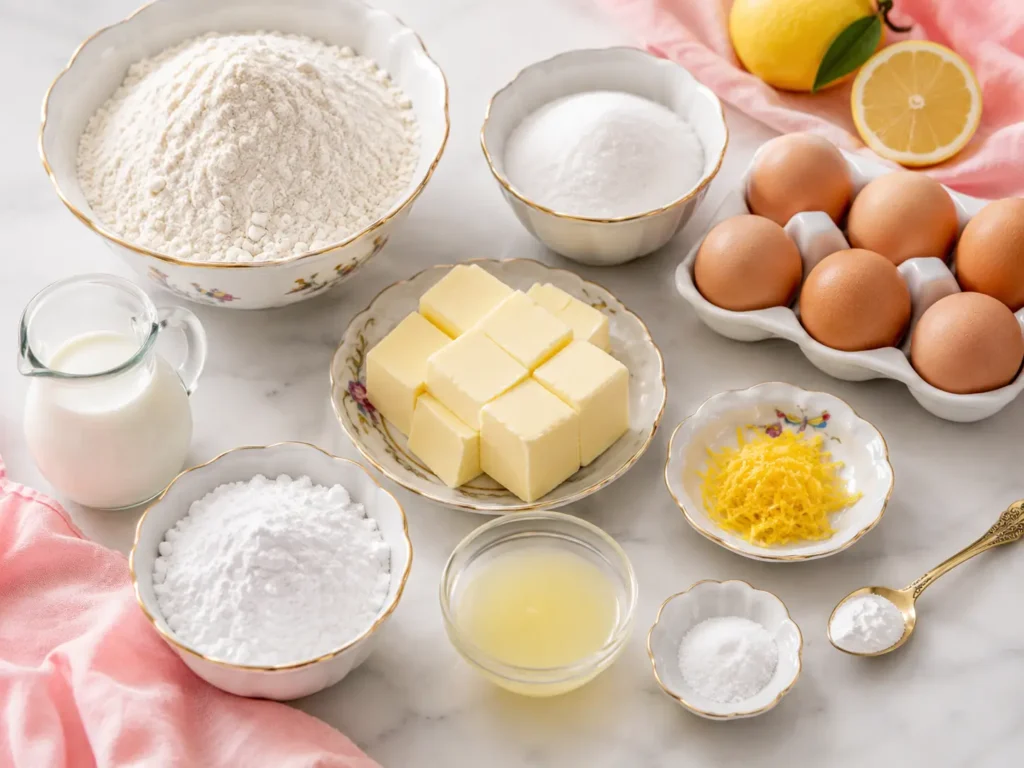
• All-purpose flour – gives the loaf structure while keeping the crumb tender and classic.
• Baking powder – helps lift the cake so it doesn’t turn overly compact.
• Salt – balances the sweetness and makes the lemon and butter taste fuller.
• Unsalted butter – creates that rich, velvety pound cake base and lets you control the saltiness.
• Granulated sugar – sweetens the cake and helps the butter whip into a lighter, fluffier mixture.
• Eggs – bind the batter together and give the loaf its dense but tender texture.
• Fresh lemon juice – adds a clean citrus brightness to both the cake and the lemon glaze.
• Lemon zest – brings the boldest lemon flavor, thanks to the natural oils in the peel.
• Whole milk – keeps the batter soft and helps prevent the loaf from baking up dry.
• Powdered sugar – turns into a smooth, sweet glaze that settles beautifully over the cooled cake.
See the recipe card below for the full list of ingredients and measurements.
Baking the Loaf Without Losing That Soft Crumb
- Start by preparing the loaf pan so the Lemon Pound Cake releases easily later. A little baking spray and parchment make life much easier, especially when the glaze is waiting and you’re trying not to damage the edges.
- Whisk the dry ingredients together in a separate bowl. This keeps the baking powder and salt evenly spread through the flour, which means the cake bakes more evenly instead of rising strangely in one corner. I’ve had one lopsided loaf in my life that looked like it was trying to escape the pan.
- Beat the butter until it looks lighter and softer, then gradually blend in the sugar. This step gives the pound cake batter a little air, and you’ll notice the mixture shifting from dense and yellow to fluffy and pale.
- Mix in the lemon juice and lemon zest. This is the part where the bowl starts smelling incredible. The zest rubs into the butter and sugar, and that fresh lemon fragrance becomes the backbone of the whole cake.
- Add the eggs one at a time, mixing well after each one. Stop and scrape the bowl when needed, especially around the bottom where butter loves to hide. Those little pockets can turn into uneven streaks if you leave them behind.
- Add the flour mixture and milk in alternating additions with the mixer on low. This helps the batter come together gently. Once the dry streaks disappear, stop mixing. Pound cake loves attention right up until the flour goes in, and then it prefers restraint.
- Spoon the batter into the prepared pan and smooth the top. Bake until the loaf is golden, risen, and a wooden pick inserted into the center comes out clean. Let it rest briefly in the pan, then move it to a wire rack so it can cool completely before glazing.
- Whisk the powdered sugar, lemon juice, and milk into a smooth glaze. Drizzle it over the cooled loaf and let it settle into those soft little ridges on top. The glaze should look thick enough to cling but loose enough to fall naturally over the edges.
Little Batter Habits That Matter More Than They Should
For the best Lemon Pound Cake, measure the flour carefully. Too much flour is the fastest way to turn a moist lemon cake into something dry and stubborn. Spoon it into the measuring cup and level it off, or use a scale if you like being extra accurate.
Use fresh lemons when you can. Bottled lemon juice doesn’t have the same lively flavor, and it definitely can’t replace zest. Zest before juicing, too. Trying to zest a floppy squeezed lemon half is one of those tiny kitchen annoyances that makes you question your choices.
Room-temperature eggs also make a difference because they blend into the butter mixture more smoothly. If the eggs are too cold, the batter can look a little curdled. It usually comes back together, but starting with warmer ingredients gives this Lemon Pound Cake a nicer texture from the beginning.
And don’t overmix after adding the flour. Once the batter looks combined, let it be. Overworking it can make the crumb tougher, and this cake is at its best when it slices cleanly but still feels soft and buttery under the fork.
Lemon Glaze, Serving, and Storing Without Drying It Out
The lemon glaze is simple, but it’s what makes this Lemon Pound Cake feel finished. Without it, the loaf is buttery and bright. With it, you get that sweet-tart top layer that melts slightly into the crumb when you take a bite. I like letting the glaze drip over the sides instead of spreading it perfectly. A pound cake should look generous, not polished within an inch of its life.
Serve slices as they are, or add fresh berries if you’re leaning into a spring or summer dessert mood. Strawberries, blueberries, and raspberries all work beautifully with the lemon flavor. A spoonful of whipped cream wouldn’t hurt either, especially if you’re serving the cake after dinner and want it to feel a little dressed up.
For a tea-time slice, this lemon loaf cake is lovely with black tea, coffee, or even a cold glass of milk. The crumb is sturdy enough to hold in your hand but tender enough that it still feels like dessert. That’s the sweet spot.
Store leftovers in an airtight container at room temperature so the cake keeps its moisture. Loose plastic wrap won’t do it any favors. For longer storage, the loaf can be wrapped well and frozen, either whole or in individual slices. I’m a big fan of freezing slices because future-you gets cake without doing dishes, which is honestly a beautiful arrangement.
A Few Lemon Pound Cake Twists That Still Feel Classic
You can add poppy seeds to the batter if you love that lemon poppy seed flavor. They bring a little crunch and make each slice look speckled and bakery-style.
This Lemon Pound Cake can also move into other citrus territory. Orange, lime, or grapefruit can shift the flavor while keeping the same buttery pound cake feeling. Lemon is still the brightest version to me, but orange gives a softer, sweeter aroma that’s really good with coffee.
If the top starts browning faster than you’d like, loosely tent it with foil toward the end of baking. The loaf should be golden, not scorched, and foil helps protect that beautiful cracked top while the center finishes baking.
Recipe Card
Recipe Name: Lemon Pound Cake
Course: Dessert
Cuisine: American
Prep Time: 10 minutes
Cook Time: 1 hour 5 minutes
Cooling Time: 10 minutes
Total Time: 1 hour 25 minutes
Servings: 8 to 10 servings
Calories: 540 kcal
Equipment
- Electric or stand mixer
- Mixing bowls
- Loaf pan
- Parchment paper
- Wire cooling rack
Ingredients
Pound Cake
- 2 cups all-purpose flour (240g)
- 1½ teaspoons baking powder
- 1 teaspoon salt
- 1 cup unsalted butter, room temperature (227g)
- 1¼ cups granulated sugar (250g)
- 4 large eggs, room temperature
- 3 tablespoons fresh lemon juice
- 1 tablespoon grated lemon zest
- ½ cup whole milk, room temperature (120mL)
Glaze
- 1 cup powdered sugar (120g)
- 1 tablespoon fresh lemon juice
- 2 teaspoons whole milk
Instructions
For the Pound Cake
- Preheat the oven to 350°F. Lightly grease a 9×5-inch loaf pan with baking spray and line it with parchment paper.
- In a medium bowl, whisk together the all-purpose flour, baking powder, and salt until evenly combined.
- In a large mixing bowl, using an electric hand mixer, or in the bowl of a stand mixer fitted with the paddle attachment, beat the butter on medium speed until light and fluffy, about 3 minutes.
- Gradually add the granulated sugar and continue beating until the mixture looks pale and fluffy, about 2 minutes.
- Beat in the fresh lemon juice and grated lemon zest until incorporated.
- Add the eggs one at a time, mixing well after each addition. Stop and scrape down the bowl as needed.
- With the mixer on low speed, add the flour mixture alternately with the whole milk, beginning and ending with the flour mixture.
- Pour the batter into the prepared loaf pan and smooth the top.
- Bake for 65 to 70 minutes, or until a wooden pick inserted into the center comes out clean.
- Let the cake cool in the pan for 10 minutes. Remove it from the pan and transfer it to a wire rack to cool completely.
For the Glaze
- In a medium bowl, whisk together the powdered sugar, fresh lemon juice, and whole milk until smooth.
- Drizzle the glaze over the completely cooled Lemon Pound Cake before serving.
Notes
- Tent the cake with foil for the final 15 minutes if the top is browning too quickly.
- For a lemon poppy seed variation, add 1 tablespoon of poppy seeds to the batter.
- Store leftovers in an airtight container at room temperature for up to 4 days.
Nutrition
Calories: 540 kcal | Carbohydrates: 72 g | Protein: 7 g | Fat: 26 g | Saturated Fat: 16 g | Polyunsaturated Fat: 1 g | Monounsaturated Fat: 7 g | Trans Fat: 1 g | Cholesterol: 145 mg | Sodium: 412 mg | Potassium: 105 mg | Fiber: 1 g | Sugar: 47 g | Vitamin A: 855 IU | Vitamin C: 4 mg | Calcium: 90 mg | Iron: 2 mg
Conclusion
A slice of Lemon Pound Cake feels like sunshine on a plate, with that buttery crumb, bright citrus glaze, and soft lemon scent that lingers after the first cut. It’s sweet, tender, and just sharp enough to keep you going back for another little bite. Serve it with coffee, tea, or a handful of fresh berries when you want something simple that still feels special.
FAQs about Lemon Pound Cake
How should I store Lemon Pound Cake?
Store Lemon Pound Cake in an airtight container at room temperature for up to 4 days. Keep it covered well so the crumb stays moist and the glaze doesn’t dry out. Avoid refrigerating it unless your kitchen is very warm.
Can I freeze lemon pound cake?
Yes, lemon pound cake freezes well. Wrap the cooled loaf or individual slices tightly in plastic wrap, then place them in a freezer-safe bag or container. Thaw at room temperature before serving.
Can I use bottled lemon juice instead of fresh lemon?
Fresh lemon juice gives the best flavor, especially with the zest. Bottled lemon juice can taste flat or sharp, so it’s not ideal for this Lemon Pound Cake. Fresh lemons also give you that fragrant zest the recipe needs.
What can I serve with this lemon loaf cake?
Serve slices with fresh berries, whipped cream, coffee, or hot tea. Blueberries, raspberries, and strawberries pair especially well with the lemon glaze. It also works nicely as a light dessert after dinner.
Lemon Pound Cake Recipe

Lemon Pound Cake bakes up rich, tender, and sunny with fresh citrus in the loaf and a sweet glaze over the top.
- Prep Time: 10 minutes
- Cook Time: 1 hour 5 minutes
- Total Time: 1 hour 25 minutes
- Yield: 8 to 10 servings 1x
- Category: Dessert
- Cuisine: American
Ingredients
- 2 cups (240g) plain all-purpose flour
- 1½ teaspoons baking powder
- 1 teaspoon fine salt
- 1 cup (227g) unsalted butter, softened to room temperature
- 1¼ cup (250g) white granulated sugar
- 4 large eggs, brought to room temperature
- 3 tablespoons fresh-squeezed lemon juice
- 1 tablespoon finely grated lemon zest
- ½ cup (120mL) whole milk, at room temperature
- 1 cup (120g) powdered sugar
- 1 tablespoon fresh-squeezed lemon juice, for the glaze
- 2 teaspoons whole milk, for the glaze
Instructions
- Heat the oven to 350°F. Coat a 9×5-inch loaf pan with baking spray, then add parchment paper for easier lifting.
- In a medium bowl, stir the flour, baking powder, and salt together until evenly blended.
- In a large mixing bowl, beat the softened butter on medium speed for about 3 minutes, until it looks pale and airy.
- Add the granulated sugar a little at a time, beating for about 2 minutes more, until the mixture turns fluffy and light.
- Mix in the fresh lemon juice and grated zest so the citrus oils work into the butter mixture.
- Add the eggs one by one, mixing after each addition. Scrape the sides and bottom of the bowl as needed so everything blends smoothly.
- On low speed, add the flour mixture in portions, alternating with the whole milk. Begin and finish with the flour mixture, and stop once the batter comes together.
- Spread the batter into the prepared loaf pan and smooth the surface.
- Bake for 65 to 70 minutes, until the top is golden and a wooden pick inserted in the center comes out clean.
- Let the loaf rest in the pan for 10 minutes, then transfer it to a wire rack and let it cool fully.
- For the glaze, whisk the powdered sugar, lemon juice, and whole milk in a medium bowl until smooth.
- Spoon or drizzle the glaze over the cooled cake, letting it settle before slicing.
Notes
- If the top darkens too quickly near the end of baking, loosely cover the loaf with foil for the final 15 minutes.
- For a poppy seed version, fold 1 tablespoon of poppy seeds into the batter before baking.
- Keep leftovers in an airtight container at room temperature for up to 4 days.
Nutrition
- Calories: 540 kcal
- Sugar: 47 g
- Sodium: 412 mg
- Fat: 26 g
- Saturated Fat: 16 g
- Unsaturated Fat: 8 g
- Trans Fat: 1 g
- Carbohydrates: 72 g
- Fiber: 1 g
- Protein: 7 g
- Cholesterol: 145 mg
Keywords: lemon cake, lemon loaf cake, glazed lemon cake, citrus pound cake, homemade lemon dessert