Watermelon Mochi Recipe for a Fresh Chewy Treat
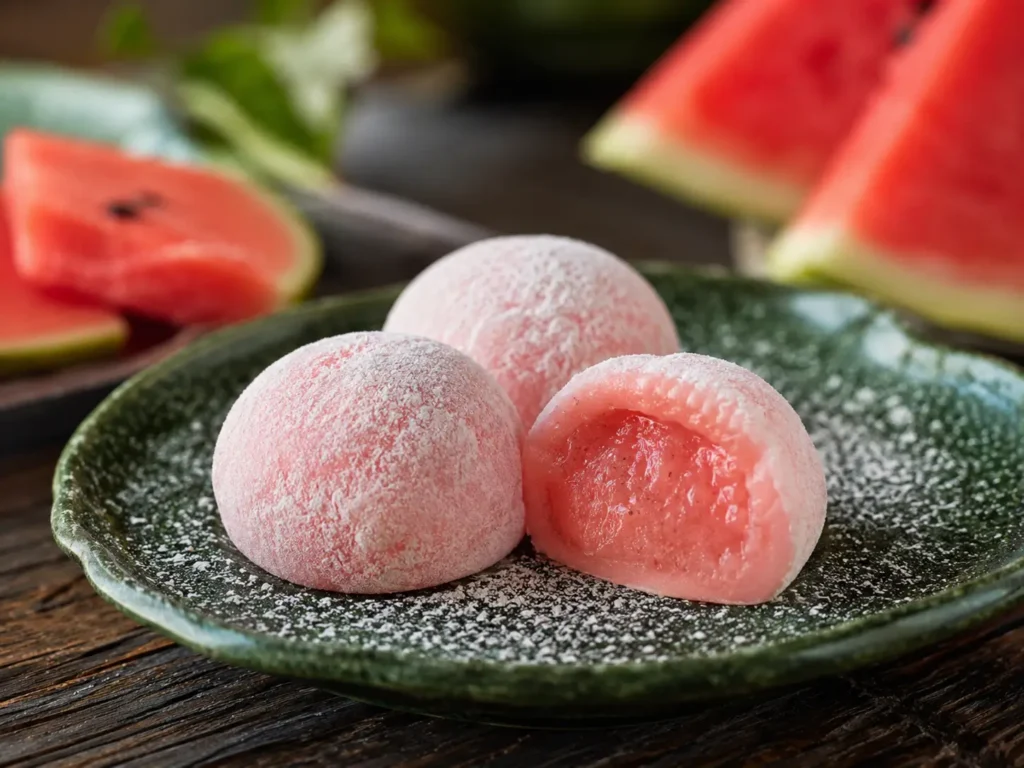
Watermelon Mochi is the kind of chilled little dessert that makes the kitchen feel like summer even before you take a bite. The first time I made it, I was honestly not prepared for how pretty the dough would look once the watermelon juice hit the glutinous rice flour. It turns soft and rosy, almost like a sunset got folded into mochi dough.
This Watermelon Mochi has that classic chewy, bouncy texture, but the flavor is lighter and fruitier than regular mochi. It’s sweet, cool, soft, and just a little buttery, with a fresh watermelon taste that sneaks in gently instead of shouting. I love it cold from the fridge, dusted so it doesn’t stick to everything in sight, though fair warning: the first piece almost always disappears before it reaches the serving plate.
The Juicy Summer Charm Behind This Watermelon Mochi
What makes Watermelon Mochi so fun is the contrast. Watermelon is watery, crisp, and refreshing, while mochi is stretchy, tender, and satisfyingly chewy. When the two come together, you get a dessert that feels playful but still delicate.
The watermelon juice gives the mochi its soft fruit flavor and natural pink color. It’s not heavy or overly rich, which makes it lovely after dinner or as a cool afternoon snack. The dough firms up as it chills, so each bite has that soft pull you expect from homemade mochi without feeling dense.
I’ve learned that this recipe rewards patience. The dough needs time to cool, knead, and chill properly. The first time I rushed it, I tried cutting it too early and ended up with sticky pink dough clinging to my knife, my fingers, and somehow the edge of the counter. Still tasted good, though. That’s the nice thing about Watermelon Mochi: even the slightly messy batches are pretty charming.
Ingredients That Give Watermelon Mochi Its Chewy Bite
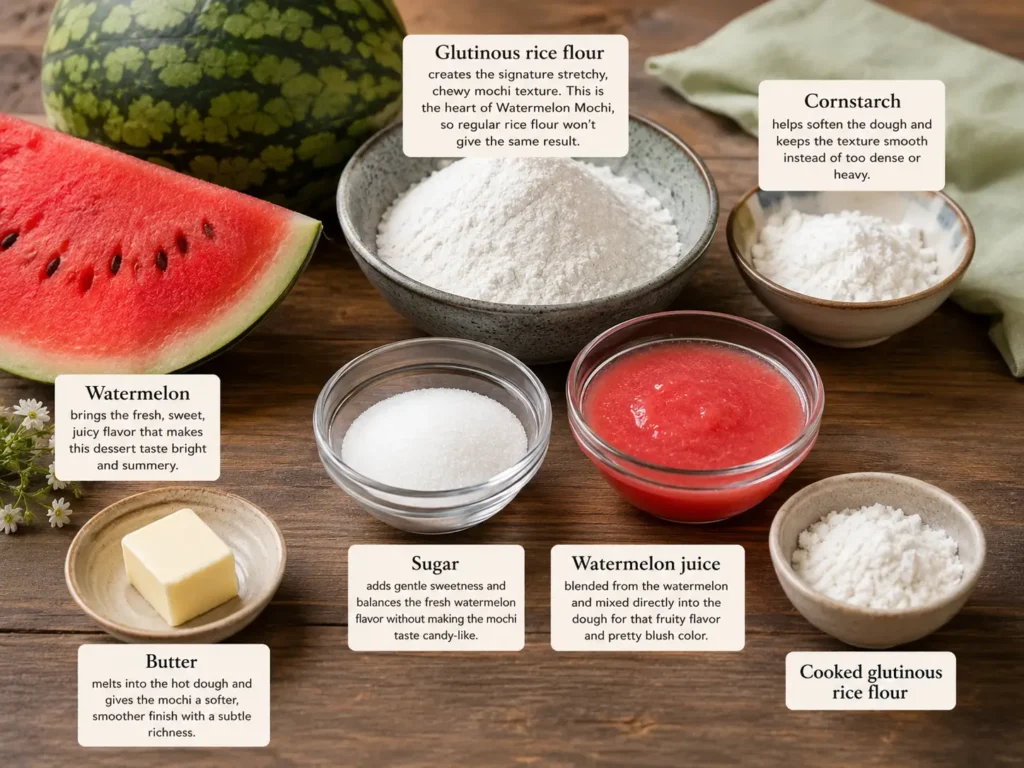
• Watermelon – brings the fresh, sweet, juicy flavor that makes this dessert taste bright and summery. A ripe watermelon gives the best color and aroma.
• Glutinous rice flour – creates the signature stretchy, chewy mochi texture. This is the heart of Watermelon Mochi, so regular rice flour won’t give the same result.
• Cornstarch – helps soften the dough and keeps the texture smooth instead of too dense or heavy.
• Sugar – adds gentle sweetness and balances the fresh watermelon flavor without making the mochi taste candy-like.
• Watermelon juice – blended from the watermelon and mixed directly into the dough for that fruity flavor and pretty blush color.
• Butter – melts into the hot dough and gives the mochi a softer, smoother finish with a subtle richness.
• Cooked glutinous rice flour – used for dusting so the chilled mochi can be cut and handled without sticking everywhere.
See the recipe card below for the full list of ingredients and measurements.
Turning Watermelon Juice Into Soft Mochi Dough
Start with the watermelon. Cut it open, scoop out the flesh, and remove the seeds. Blend the fruit until smooth, then use the juice as the liquid for the dough. The smell at this point is so fresh and sweet that it feels like you should be pouring it over ice instead of into a bowl of flour, but trust the process.
In a large bowl, combine the glutinous rice flour, cornstarch, and sugar. Slowly pour in the watermelon juice while stirring. Go gradually here. The mixture moves from powdery to thick and glossy, and it’s easier to smooth out if you don’t dump everything in at once.
For a silkier Watermelon Mochi, sift the mixture before microwaving. It’s a small step, but it helps catch stubborn lumps and makes the finished mochi feel smoother on the tongue. Cover the bowl with plastic wrap, poke a few tiny holes to let steam escape, and microwave until the dough cooks through.
The dough will be hot and sticky when it comes out, so don’t rush in with bare hands. Stir in the butter while the mochi mixture is still warm enough to melt it. At first it may look like the butter doesn’t want to cooperate, but keep folding and pressing it in. Eventually, the dough turns shinier and smoother.
Once it cools to room temperature, knead it until it becomes elastic. This is where Watermelon Mochi starts feeling like real mochi. The dough stretches, resists a little, then softens as you work it. It’s oddly satisfying, like kneading a warm, fruity cloud that’s trying very hard to stick to you.
Transfer the dough to a parchment-lined container, flatten the top, and chill it until set. After chilling, dust your work surface with cooked glutinous rice flour, turn out the dough, and cut it into strips, then smaller bite-sized pieces.
Little Details That Make Watermelon Mochi Better
Keep the Dough Smooth, Not Tough
Watermelon Mochi should be chewy, not rubbery. The biggest trick is not overheating it. Once the dough is cooked, it should be sticky, soft, and stretchy. If it dries out too much, the texture can become firmer than you want.
Sifting also helps more than you’d think. I used to skip it because I was impatient, and then I’d find tiny floury bits hiding in an otherwise lovely piece of mochi. Not dramatic. Just annoying. A quick pass through a sieve makes the dough smoother and more even.
When kneading, let the dough cool enough to handle comfortably. It should still be soft, but not hot. Dust only when needed, because too much extra flour on the outside can dull the pretty watermelon flavor.
Chilling, Cutting, and Serving Without the Sticky Drama
Chilling is what helps Watermelon Mochi hold its shape. Once the dough has rested in the fridge, it becomes easier to slice into neat pieces. Use cooked glutinous rice flour on the surface and knife, and don’t be shy about dusting lightly as you go.
Serve Watermelon Mochi chilled for the cleanest flavor. The cold temperature makes the watermelon taste more refreshing, and the mochi develops a firmer, pleasantly chewy bite. It’s especially good on a warm day when you want dessert but don’t want anything heavy.
For a simple plate, serve the pieces as they are with a light dusting. For something prettier, pair them with fresh fruit like strawberries, mango, kiwi, or blueberries. The colors look gorgeous together, and the juicy fruit makes the soft mochi feel even more refreshing.
You can also add Watermelon Mochi to a dessert board with small sweets, fresh mint, or a little shredded coconut. I like it best when the plate stays bright and simple. This isn’t a fussy dessert. It’s soft, fruity, chilled, and a little playful.
Flavor Twists and Storage Notes for Watermelon Mochi
Watermelon Mochi is lovely plain, but it can handle a few gentle variations. A small touch of citrus zest can make the fruit flavor pop. Shredded coconut adds a tropical edge. A drizzle of honey over fruit served alongside the mochi can make the whole plate feel a little more dressed up without covering the watermelon flavor.
You can also play with fillings if you’re comfortable shaping mochi. Sweet red bean paste, small pieces of fresh fruit, or a soft chocolate filling can work nicely, though the original version is already delicious without anything tucked inside.
For storage, keep Watermelon Mochi in an airtight container. It’s best enjoyed fresh, but it can be refrigerated for longer freshness. Just know that the fridge can make mochi firmer, so the texture may not be quite as soft as the first day. Freezing isn’t the best idea for this dessert because it can change that chewy texture that makes mochi so good in the first place.
If the pieces start sticking together, dust them lightly again before serving. Mochi has a clingy personality. That’s part of its charm.
Instructions
- Cut the watermelon in half, scoop out the flesh, and remove any seeds.
- Blend the watermelon flesh until smooth, making enough watermelon juice for the dough.
- In a large bowl, mix the glutinous rice flour, cornstarch, and sugar.
- Gradually pour in the watermelon juice while stirring until the mixture is evenly combined. Sift the mixture if you want a smoother mochi texture.
- Cover the bowl with plastic wrap and poke a few small holes in the top so steam can escape.
- Microwave on high for 5 minutes.
- While the mixture is still hot, stir in the butter until it melts fully into the dough.
- Let the dough cool to room temperature, then knead it for about 5 minutes, until smooth and elastic.
- Line a container with parchment paper, transfer the dough into it, and flatten the surface.
- Refrigerate for at least 3 hours, or until the dough is set.
- Dust a work surface with cooked glutinous rice flour.
- Turn out the chilled dough, cut it into strips, then slice into bite-sized pieces.
Conclusion
Soft, chilled, and just a little wobbly, Watermelon Mochi is one of those treats that feels playful the second it hits the plate. The sweet watermelon flavor stays light, while the chewy mochi texture makes every bite slow and satisfying. I love serving it cold with fresh fruit on the side, especially when the kitchen still smells faintly like summer melon.
FAQs about Watermelon Mochi
Can Watermelon Mochi be stored in the fridge?
Yes, Watermelon Mochi can be stored in an airtight container in the fridge. It tastes best fresh, but chilling helps it keep its shape. The texture may firm up after refrigeration, so let it sit briefly before serving if it feels too stiff.
Can I freeze watermelon mochi?
Freezing watermelon mochi isn’t recommended. Mochi can lose its soft, chewy texture after thawing, and the watermelon flavor may taste less fresh. For the best bite, enjoy it chilled rather than frozen.
Can I use regular rice flour instead of glutinous rice flour?
No, regular rice flour won’t give the same stretchy texture. Glutinous rice flour is what creates that soft, chewy mochi bite. Using regular rice flour would make the dough more crumbly and less elastic.
What should I serve with Watermelon Mochi?
Watermelon Mochi pairs beautifully with fresh berries, mango, kiwi, or extra chilled watermelon. A light dusting of cooked glutinous rice flour keeps it neat. Serve it cold for the cleanest, freshest flavor.
Watermelon Mochi

Watermelon Mochi is a chilled, chewy fruit dessert made with fresh watermelon juice, sweet rice flour, and a soft buttery finish.
- Cook Time: 5 minutes
- Total Time: 5 minutes
- Yield: 2 servings 1x
- Category: Dessert
- Method: Microwave
- Cuisine: Japanese
Ingredients
- 1 ripe watermelon
- 230 g glutinous rice flour
- 65 g cornstarch
- 40 g sugar
- 300 g watermelon juice, blended from the watermelon
- 30 g butter
- Cooked glutinous rice flour, for dusting the dough
Instructions
- Slice the watermelon open, scoop out the flesh, and remove the seeds.
- Blend the watermelon flesh until smooth, then measure out 300 g of juice.
- Add the glutinous rice flour, cornstarch, and sugar to a large mixing bowl.
- Pour in the watermelon juice a little at a time, stirring until the batter looks even and smooth. Sift the mixture if you want a finer texture.
- Cover the bowl with plastic wrap, then pierce a few small steam holes in the top.
- Microwave on high for 5 minutes, until the mochi mixture is cooked through and sticky.
- While the dough is still hot, fold in the butter until it melts into the mixture.
- Let the dough cool to room temperature, then knead it for about 5 minutes until soft, smooth, and stretchy.
- Line a container with parchment paper, place the dough inside, and press it into an even layer.
- Chill the dough in the refrigerator for at least 3 hours, or until fully set.
- Dust your work surface with cooked glutinous rice flour, then turn out the chilled mochi.
- Slice the dough into strips, then cut those strips into small bite-sized pieces.
Notes
- Choose a ripe watermelon for the sweetest juice and best natural flavor.
- Sifting the batter before cooking helps prevent small lumps in the finished mochi.
- A light dusting of cooked glutinous rice flour keeps the pieces from sticking together.
- Serve chilled for a firmer bite and the freshest watermelon flavor.
- Store leftovers in an airtight container in the refrigerator for up to 3 days.
- Freezing is not recommended because it can change the chewy texture.
Nutrition
- Serving Size: one normal portion
- Calories: 724.5 calories
Keywords: Watermelon Mochi, watermelon mochi recipe, chewy mochi dessert, watermelon dessert, homemade mochi